•  

Train featuring World Heritage-listed ancient sites

OSAKA, Japan, Aug. 2 Kyodo - A departure ceremony is held at Kintetsu Railway's Osaka Abenobashi Station in Osaka on Aug. 1, 2026, for a train with liveries based on a group of ancient sites in the Asuka-Fujiwara area in Nara Prefecture, western Japan, that were recently added to UNESCO's World Heritage list. (Kyodo)

  •  
Train featuring World Heritage-listed ancient sites

Train featuring World Heritage-listed ancient sites

Photo taken at Kintetsu Railway's Osaka Abenobashi Station in Osaka on Aug. 1, 2026, shows a train with liveries based on a group of ancient sites in the Asuka-Fujiwara area in Nara Prefecture, western Japan, that were recently added to UNESCO's World Heritage list.

  •  
Train featuring World Heritage-listed ancient sites

Train featuring World Heritage-listed ancient sites

Photo taken at Kintetsu Railway's Osaka Abenobashi Station in Osaka on Aug. 1, 2026, shows a train with liveries based on a group of ancient sites in the Asuka-Fujiwara area in Nara Prefecture, western Japan, that were recently added to UNESCO's World Heritage list.

  •  
Train featuring World Heritage-listed ancient sites

Train featuring World Heritage-listed ancient sites

A departure ceremony is held at Kintetsu Railway's Osaka Abenobashi Station in Osaka on Aug. 1, 2026, for a train with liveries based on a group of ancient sites in the Asuka-Fujiwara area in Nara Prefecture, western Japan, that were recently added to UNESCO's World Heritage list.

  •  
Japan's Asuka-Fujiwara sites added to World Heritage list

Japan's Asuka-Fujiwara sites added to World Heritage list

People celebrate at a public viewing site in Kashihara in Nara Prefecture on July 26, 2026, after UNESCO decided earlier in the day in Busan, South Korea, to add a group of ancient sites in the western Japan prefecture's Asuka-Fujiwara area, including Kashihara, to its World Heritage list.

  •  
Japan's Asuka-Fujiwara sites added to World Heritage list

Japan's Asuka-Fujiwara sites added to World Heritage list

People celebrate at a public viewing site in Kashihara in Nara Prefecture on July 26, 2026, after UNESCO decided earlier in the day in Busan, South Korea, to add a group of ancient sites in the western Japan prefecture's Asuka-Fujiwara area, including Kashihara, to its World Heritage list.

  •  
Japan's Asuka-Fujiwara sites added to World Heritage list

Japan's Asuka-Fujiwara sites added to World Heritage list

People celebrate at a public viewing site in Kashihara in Nara Prefecture on July 26, 2026, after UNESCO decided earlier in the day in Busan, South Korea, to add a group of ancient sites in the western Japan prefecture's Asuka-Fujiwara area, including Kashihara, to its World Heritage list.

  •  
Japan's Asuka-Fujiwara sites added to World Heritage list

Japan's Asuka-Fujiwara sites added to World Heritage list

People celebrate at a public viewing site in Kashihara in Nara Prefecture on July 26, 2026, after UNESCO decided earlier in the day in Busan, South Korea, to add a group of ancient sites in the western Japan prefecture's Asuka-Fujiwara area, including Kashihara, to its World Heritage list.

  •  
Japan's Asuka-Fujiwara sites added to World Heritage list

Japan's Asuka-Fujiwara sites added to World Heritage list

People celebrate at a public viewing site in Kashihara in Nara Prefecture on July 26, 2026, after UNESCO decided earlier in the day in Busan, South Korea, to add a group of ancient sites in the western Japan prefecture's Asuka-Fujiwara area, including Kashihara, to its World Heritage list.

  •  
Japan's Asuka-Fujiwara sites added to World Heritage list

Japan's Asuka-Fujiwara sites added to World Heritage list

Makoto Yamashita (C), governor of Japan's Nara Prefecture, makes a speech in Busan on July 26, 2026, after the UNESCO World Heritage Committee decided in the South Korean city earlier in the day to add a group of ancient sites in the Asuka-Fujiwara area in the western Japan prefecture to its World Heritage list.

  •  
Japan's Asuka-Fujiwara sites added to World Heritage list

Japan's Asuka-Fujiwara sites added to World Heritage list

Makoto Yamashita (C), governor of Japan's Nara Prefecture, makes a speech in Busan on July 26, 2026, after the UNESCO World Heritage Committee decided in the South Korean city earlier in the day to add a group of ancient sites in the Asuka-Fujiwara area in the western Japan prefecture to its World Heritage list.

  •  
Japan's Asuka-Fujiwara sites added to World Heritage list

Japan's Asuka-Fujiwara sites added to World Heritage list

Makoto Yamashita, governor of Japan's Nara Prefecture, meets the press in Busan on July 26, 2026, after the UNESCO World Heritage Committee decided in the South Korean city earlier in the day to add a group of ancient sites in the Asuka-Fujiwara area in the western Japan prefecture to its World Heritage list.

  •  
Japan's Asuka-Fujiwara sites added to World Heritage list

Japan's Asuka-Fujiwara sites added to World Heritage list

Makoto Yamashita (C) governor of Japan's Nara Prefecture, celebrates in Busan on July 26, 2026, after the UNESCO World Heritage Committee decided in the South Korean city earlier in the day to add a group of ancient sites in the Asuka-Fujiwara area in the western Japan prefecture to its World Heritage list.

  •  
Illustration - Persepolis - Iran

Illustration - Persepolis - Iran

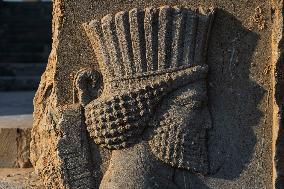
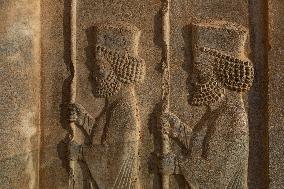
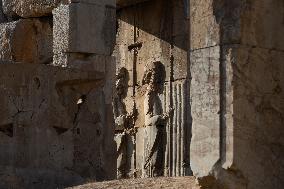
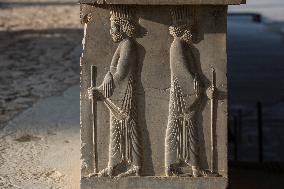
The figure of a royal guard is carved on a stone panel in Persepolis, Marvdasht, Fars, Iran on November 6, 2024. Built in the 6th century BCE by Darius the Great, Persepolis, also known as Takht-e Jamshid, stands as one of the most important archaeological sites of the ancient Persian world. Photo by Morteza Aminoroayayi/Middle East Images/ABACAPRESS.COM

  •  
Illustration - Persepolis - Iran

Illustration - Persepolis - Iran

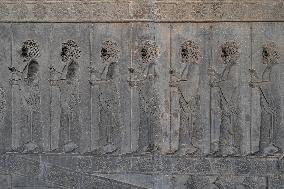
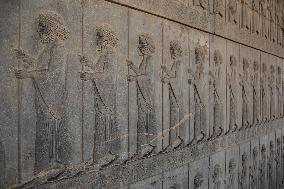
Ancient figures are carved on a wall at Persepolis in Marvdasht, Fars, Iran on November 6, 2024. Built in the 6th century BCE by Darius the Great, Persepolis, also known as Takht-e Jamshid, stands as one of the most important archaeological sites of the ancient Persian world. Photo by Morteza Aminoroayayi/Middle East Images/ABACAPRESS.COM

  •  
Illustration - Persepolis - Iran

Illustration - Persepolis - Iran

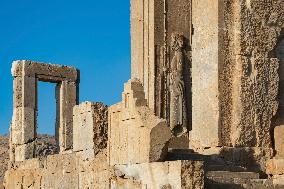
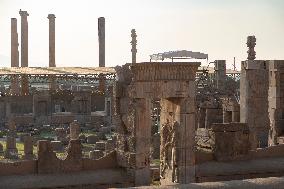
A stone figure is carved on a gateway wall at Persepolis in Marvdasht, Fars, Iran on November 6, 2024. Stone columns and a towering doorway stand at Persepolis, Iran on November 6, 2024. Built in the 6th century BCE by Darius the Great, Persepolis, also known as Takht-e Jamshid, stands as one of the most important archaeological sites of the ancient Persian world. Photo by Morteza Aminoroayayi/Middle East Images/ABACAPRESS.COM

  •  
Illustration - Persepolis - Iran

Illustration - Persepolis - Iran

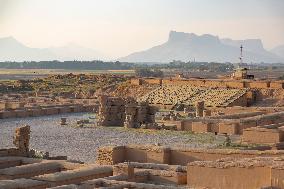
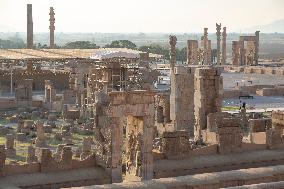
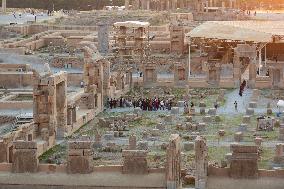
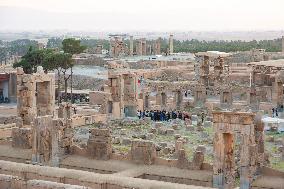
A wide view shows ancient structures and terraces at Persepolis in Marvdasht, Fars, Iran on November 6, 2024. Built in the 6th century BCE by Darius the Great, Persepolis, also known as Takht-e Jamshid, stands as one of the most important archaeological sites of the ancient Persian world. Photo by Morteza Aminoroayayi/Middle East Images/ABACAPRESS.COM

  •  
Illustration - Persepolis - Iran

Illustration - Persepolis - Iran

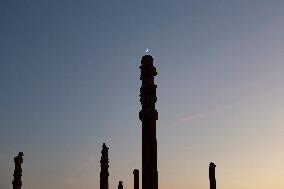
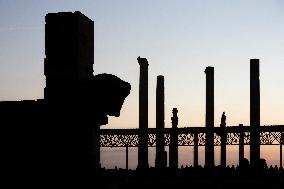
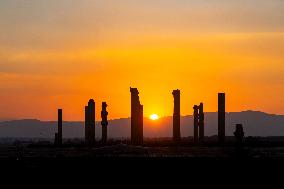
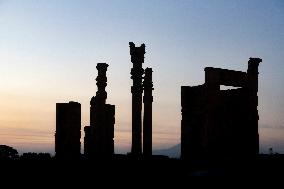
Silhouettes of columns stand against the sky in Persepolis, Marvdasht, Fars, Iran on November 6, 2024. Built in the 6th century BCE by Darius the Great, Persepolis, also known as Takht-e Jamshid, stands as one of the most important archaeological sites of the ancient Persian world. Photo by Morteza Aminoroayayi/Middle East Images/ABACAPRESS.COM

  •  
Illustration - Persepolis - Iran

Illustration - Persepolis - Iran

Silhouettes of columns stand against the sky in Persepolis, Marvdasht, Fars, Iran on November 6, 2024. Built in the 6th century BCE by Darius the Great, Persepolis, also known as Takht-e Jamshid, stands as one of the most important archaeological sites of the ancient Persian world. Photo by Morteza Aminoroayayi/Middle East Images/ABACAPRESS.COM

  •  
Illustration - Persepolis - Iran

Illustration - Persepolis - Iran

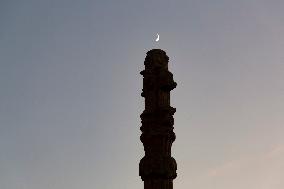
The moon sits above a stone column at Persepolis in Marvdasht, Fars, Iran on November 6, 2024. Built in the 6th century BCE by Darius the Great, Persepolis, also known as Takht-e Jamshid, stands as one of the most important archaeological sites of the ancient Persian world. Photo by Morteza Aminoroayayi/Middle East Images/ABACAPRESS.COM

  •  
Illustration - Persepolis - Iran

Illustration - Persepolis - Iran

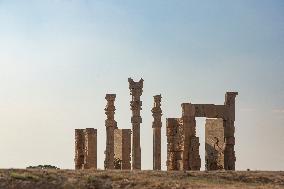
A view of stone columns and gates at Persepolis in Marvdasht, Fars, Iran on November 6, 2024. Built in the 6th century BCE by Darius the Great, Persepolis, also known as Takht-e Jamshid, stands as one of the most important archaeological sites of the ancient Persian world. Photo by Morteza Aminoroayayi/Middle East Images/ABACAPRESS.COM

  •  
Illustration - Persepolis - Iran

Illustration - Persepolis - Iran

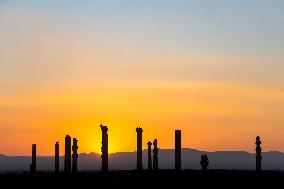
The sun sets behind columns at Persepolis in Marvdasht, Fars, Iran on November 6, 2024. Built in the 6th century BCE by Darius the Great, Persepolis, also known as Takht-e Jamshid, stands as one of the most important archaeological sites of the ancient Persian world. Photo by Morteza Aminoroayayi/Middle East Images/ABACAPRESS.COM

  •  
Illustration - Persepolis - Iran

Illustration - Persepolis - Iran

Ancient figures are carved on a wall at Persepolis in Marvdasht, Fars, Iran on November 6, 2024. Built in the 6th century BCE by Darius the Great, Persepolis, also known as Takht-e Jamshid, stands as one of the most important archaeological sites of the ancient Persian world. Photo by Morteza Aminoroayayi/Middle East Images/ABACAPRESS.COM

  •  
Illustration - Persepolis - Iran

Illustration - Persepolis - Iran

Ancient figures are carved on a wall at Persepolis in Marvdasht, Fars, Iran on November 6, 2024. Built in the 6th century BCE by Darius the Great, Persepolis, also known as Takht-e Jamshid, stands as one of the most important archaeological sites of the ancient Persian world. Photo by Morteza Aminoroayayi/Middle East Images/ABACAPRESS.COM

  •  
Illustration - Persepolis - Iran

Illustration - Persepolis - Iran

Visitors walk through ancient columns at Persepolis in Marvdasht, Fars, Iran on November 6, 2024. Built in the 6th century BCE by Darius the Great, Persepolis, also known as Takht-e Jamshid, stands as one of the most important archaeological sites of the ancient Persian world. Photo by Morteza Aminoroayayi/Middle East Images/ABACAPRESS.COM

  •  
Illustration - Persepolis - Iran

Illustration - Persepolis - Iran

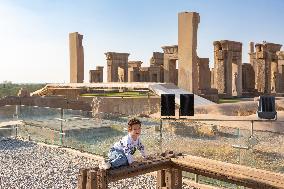
A child sits on a wooden bench near the ruins of Persepolis in Marvdasht, Fars, Iran on November 6, 2024. Built in the 6th century BCE by Darius the Great, Persepolis, also known as Takht-e Jamshid, stands as one of the most important archaeological sites of the ancient Persian world. Photo by Morteza Aminoroayayi/Middle East Images/ABACAPRESS.COM

  •  
Illustration - Persepolis - Iran

Illustration - Persepolis - Iran

Silhouettes of columns stand against the sky in Persepolis, Marvdasht, Fars, Iran on November 6, 2024. Built in the 6th century BCE by Darius the Great, Persepolis, also known as Takht-e Jamshid, stands as one of the most important archaeological sites of the ancient Persian world. Photo by Morteza Aminoroayayi/Middle East Images/ABACAPRESS.COM

  •  
Illustration - Persepolis - Iran

Illustration - Persepolis - Iran

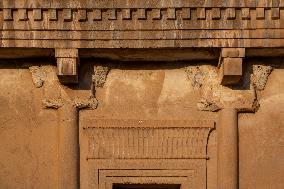
Detail of a stone doorway is seen at Persepolis in Marvdasht, Fars, Iran on November 6, 2024. Built in the 6th century BCE by Darius the Great, Persepolis, also known as Takht-e Jamshid, stands as one of the most important archaeological sites of the ancient Persian world. Photo by Morteza Aminoroayayi/Middle East Images/ABACAPRESS.COM

  •  
Illustration - Persepolis - Iran

Illustration - Persepolis - Iran

The sun sets behind columns at Persepolis in Marvdasht, Fars, Iran on November 6, 2024. Built in the 6th century BCE by Darius the Great, Persepolis, also known as Takht-e Jamshid, stands as one of the most important archaeological sites of the ancient Persian world. Photo by Morteza Aminoroayayi/Middle East Images/ABACAPRESS.COM

  •  
Illustration - Persepolis - Iran

Illustration - Persepolis - Iran

Visitors walk through ancient columns at Persepolis in Marvdasht, Fars, Iran on November 6, 2024. Built in the 6th century BCE by Darius the Great, Persepolis, also known as Takht-e Jamshid, stands as one of the most important archaeological sites of the ancient Persian world. Photo by Morteza Aminoroayayi/Middle East Images/ABACAPRESS.COM

  •  
Illustration - Persepolis - Iran

Illustration - Persepolis - Iran

A view of stone columns and gates at Persepolis in Marvdasht, Fars, Iran on November 6, 2024. Built in the 6th century BCE by Darius the Great, Persepolis, also known as Takht-e Jamshid, stands as one of the most important archaeological sites of the ancient Persian world. Photo by Morteza Aminoroayayi/Middle East Images/ABACAPRESS.COM

  •  
Illustration - Persepolis - Iran

Illustration - Persepolis - Iran

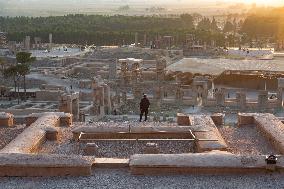
A man stands on a platform overlooking Persepolis in Marvdasht, Fars, Iran on November 6, 2024. Built in the 6th century BCE by Darius the Great, Persepolis, also known as Takht-e Jamshid, stands as one of the most important archaeological sites of the ancient Persian world. Photo by Morteza Aminoroayayi/Middle East Images/ABACAPRESS.COM

  •  
Illustration - Persepolis - Iran

Illustration - Persepolis - Iran

A carving of figures appears on a stone wall at Persepolis, Iran on November 6, 2024. Built in the 6th century BCE by Darius the Great, Persepolis, also known as Takht-e Jamshid, stands as one of the most important archaeological sites of the ancient Persian world. Photo by Morteza Aminoroayayi/Middle East Images/ABACAPRESS.COM

  •  
Illustration - Persepolis - Iran

Illustration - Persepolis - Iran

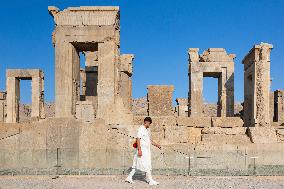
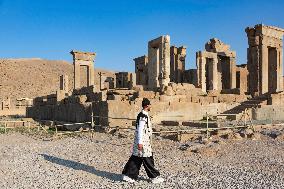
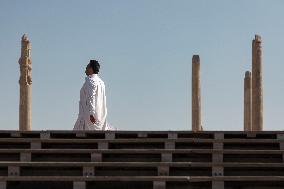
A man walks past stone columns at Persepolis in Marvdasht, Fars, Iran on November 6, 2024. Built in the 6th century BCE by Darius the Great, Persepolis, also known as Takht-e Jamshid, stands as one of the most important archaeological sites of the ancient Persian world. Photo by Morteza Aminoroayayi/Middle East Images/ABACAPRESS.COM

  •  
Illustration - Persepolis - Iran

Illustration - Persepolis - Iran

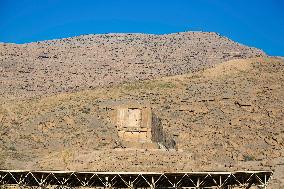
A royal tomb is carved into the mountainside above Persepolis in Marvdasht, Fars, Iran on November 6, 2024. Built in the 6th century BCE by Darius the Great, Persepolis, also known as Takht-e Jamshid, stands as one of the most important archaeological sites of the ancient Persian world. Photo by Morteza Aminoroayayi/Middle East Images/ABACAPRESS.COM

  •  
Illustration - Persepolis - Iran

Illustration - Persepolis - Iran

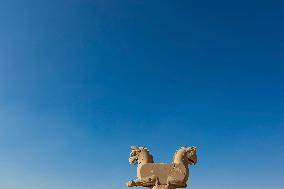
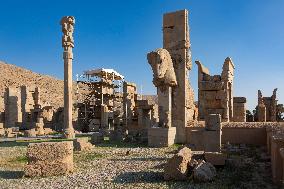
A sculpted double-headed griffin sits atop a column at Takht-e Jamshid in Marvdasht, Iran on November 6, 2024. Built in the 6th century BCE by Darius the Great, Persepolis, also known as Takht-e Jamshid, stands as one of the most important archaeological sites of the ancient Persian world. Photo by Morteza Aminoroayayi/Middle East Images/ABACAPRESS.COM

  •  
Illustration - Persepolis - Iran

Illustration - Persepolis - Iran

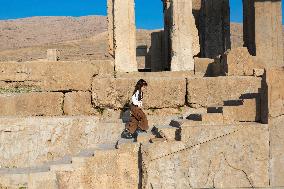
A child climbs a staircase among ancient columns at Persepolis in Marvdasht, Fars, Iran on November 6, 2024. Built in the 6th century BCE by Darius the Great, Persepolis, also known as Takht-e Jamshid, stands as one of the most important archaeological sites of the ancient Persian world. Photo by Morteza Aminoroayayi/Middle East Images/ABACAPRESS.COM

  •  
Illustration - Persepolis - Iran

Illustration - Persepolis - Iran

Ancient figures are carved on a wall at Persepolis in Marvdasht, Fars, Iran on November 6, 2024. Built in the 6th century BCE by Darius the Great, Persepolis, also known as Takht-e Jamshid, stands as one of the most important archaeological sites of the ancient Persian world. Photo by Morteza Aminoroayayi/Middle East Images/ABACAPRESS.COM

  •  
Illustration - Persepolis - Iran

Illustration - Persepolis - Iran

A man walks past stone columns at Persepolis in Marvdasht, Fars, Iran on November 6, 2024. Built in the 6th century BCE by Darius the Great, Persepolis, also known as Takht-e Jamshid, stands as one of the most important archaeological sites of the ancient Persian world. Photo by Morteza Aminoroayayi/Middle East Images/ABACAPRESS.COM

  •  
Illustration - Persepolis - Iran

Illustration - Persepolis - Iran

Stone columns and ruined gateways rise from the Persepolis terrace at Takht-e Jamshid in Marvdasht, Iran on November 6, 2024. Built in the 6th century BCE by Darius the Great, Persepolis, also known as Takht-e Jamshid, stands as one of the most important archaeological sites of the ancient Persian world. Photo by Morteza Aminoroayayi/Middle East Images/ABACAPRESS.COM

  •  
Illustration - Persepolis - Iran

Illustration - Persepolis - Iran

A view of Apadana Palace at Takht-e Jamshid in Marvdasht, Iran on November 6, 2024. Built in the 6th century BCE by Darius the Great, Persepolis, also known as Takht-e Jamshid, stands as one of the most important archaeological sites of the ancient Persian world. Photo by Morteza Aminoroayayi/Middle East Images/ABACAPRESS.COM

  •  
Illustration - Persepolis - Iran

Illustration - Persepolis - Iran

A man walks past towering stone columns at Takht-e Jamshid in Marvdasht, Iran on November 6, 2024. Built in the 6th century BCE by Darius the Great, Persepolis, also known as Takht-e Jamshid, stands as one of the most important archaeological sites of the ancient Persian world. Photo by Morteza Aminoroayayi/Middle East Images/ABACAPRESS.COM

  •  
Israeli Bombing Puts Ancient Ruins At Risk - Baalbek

Israeli Bombing Puts Ancient Ruins At Risk - Baalbek

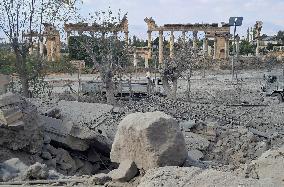
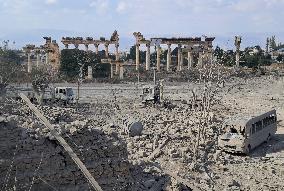
This photo shows the damage caused by Israeli airstrikes inside the ancient citadel of Baalbek in Lebanon, on November 7, 2024. On Wednesday, Israeli forces targeted residential neighborhoods in Baalbek and the historic "Al-Manshiya" building, which was completely destroyed, according to Baalbek Mayor Mustafa al-Shal. For over two millennia, the Roman temples at Baalbek in eastern Lebanon have stood as some of the finest examples of Roman architecture anywhere in the world. On Wednesday, a car park just metres away from the Unesco World Heritage site was hit by an Israeli air strike. The attack, which also destroyed a centuries-old Ottoman building, highlighted what some archaeologists say is the risk of irreparable damage to historical sites across Lebanon from the current war between Israel and Hezbollah. Photo by Maher Kamar/Xinhua/ABACAPRESS.COM

  •  
Israeli Bombing Puts Ancient Ruins At Risk - Baalbek

Israeli Bombing Puts Ancient Ruins At Risk - Baalbek

This photo shows the damage caused by Israeli airstrikes inside the ancient citadel of Baalbek in Lebanon, on November 7, 2024. On Wednesday, Israeli forces targeted residential neighborhoods in Baalbek and the historic "Al-Manshiya" building, which was completely destroyed, according to Baalbek Mayor Mustafa al-Shal. For over two millennia, the Roman temples at Baalbek in eastern Lebanon have stood as some of the finest examples of Roman architecture anywhere in the world. On Wednesday, a car park just metres away from the Unesco World Heritage site was hit by an Israeli air strike. The attack, which also destroyed a centuries-old Ottoman building, highlighted what some archaeologists say is the risk of irreparable damage to historical sites across Lebanon from the current war between Israel and Hezbollah. Photo by Maher Kamar/Xinhua/ABACAPRESS.COM

  •  
Israeli Bombing Puts Ancient Ruins At Risk - Baalbek

Israeli Bombing Puts Ancient Ruins At Risk - Baalbek

This photo shows the damage caused by Israeli airstrikes inside the ancient citadel of Baalbek in Lebanon, on November 7, 2024. On Wednesday, Israeli forces targeted residential neighborhoods in Baalbek and the historic "Al-Manshiya" building, which was completely destroyed, according to Baalbek Mayor Mustafa al-Shal. For over two millennia, the Roman temples at Baalbek in eastern Lebanon have stood as some of the finest examples of Roman architecture anywhere in the world. On Wednesday, a car park just metres away from the Unesco World Heritage site was hit by an Israeli air strike. The attack, which also destroyed a centuries-old Ottoman building, highlighted what some archaeologists say is the risk of irreparable damage to historical sites across Lebanon from the current war between Israel and Hezbollah. Photo by Maher Kamar/Xinhua/ABACAPRESS.COM

  •  
Xinjiang Scientific Expedition - China

Xinjiang Scientific Expedition - China

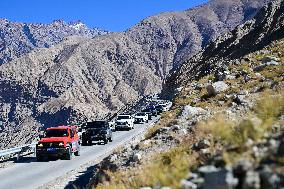
A scientific expedition team head for Muji Township of Akto County, Kirgiz Autonomous Prefecture of Kizilsu in northwest China's Xinjiang Uygur Autonomous Region, Oct. 19, 2024. A multidisciplinary scientific expedition was launched on Saturday in Atux City in Xinjiang. The expedition, which will last until October 27, is expected to carry out investigations at ancient roads, historical sites and important geographical marks in Xinjiang's Kirgiz Autonomous Prefecture of Kizilsu. Phot by Ding Lei/Xinhua/ABACAPRESS.COM

  •  
Xinjiang Scientific Expedition - China

Xinjiang Scientific Expedition - China

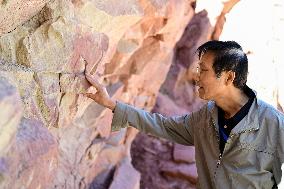
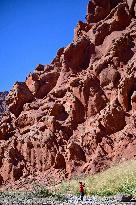
Tan Dahai, a member of a scientific expedition team, checks rock formations at a canyon in Bulungkol Township of Akto County, Kirgiz Autonomous Prefecture of Kizilsu in northwest China's Xinjiang Uygur Autonomous Region, Oct. 19, 2024. A multidisciplinary scientific expedition was launched on Saturday in Atux City in Xinjiang. The expedition, which will last until October 27, is expected to carry out investigations at ancient roads, historical sites and important geographical marks in Xinjiang's Kirgiz Autonomous Prefecture of Kizilsu. Phot by Ding Lei/Xinhua/ABACAPRESS.COM

  •  
Xinjiang Scientific Expedition - China

Xinjiang Scientific Expedition - China

Wu Xinhua, a member of a scientific expedition team, takes pictures of rock formations at a canyon in Bulungkol Township of Akto County, Kirgiz Autonomous Prefecture of Kizilsu in northwest China's Xinjiang Uygur Autonomous Region, Oct. 19, 2024. A multidisciplinary scientific expedition was launched on Saturday in Atux City in Xinjiang. The expedition, which will last until October 27, is expected to carry out investigations at ancient roads, historical sites and important geographical marks in Xinjiang's Kirgiz Autonomous Prefecture of Kizilsu. Phot by Ding Lei/Xinhua/ABACAPRESS.COM

  •  
Xinjiang Scientific Expedition - China

Xinjiang Scientific Expedition - China

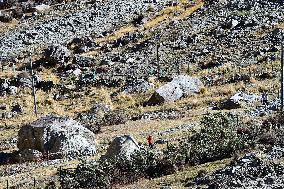
Members of a scientific expedition team check an ancient post in Bulungkol Township of Akto County, Kirgiz Autonomous Prefecture of Kizilsu in northwest China's Xinjiang Uygur Autonomous Region, Oct. 19, 2024. A multidisciplinary scientific expedition was launched on Saturday in Atux City in Xinjiang. The expedition, which will last until October 27, is expected to carry out investigations at ancient roads, historical sites and important geographical marks in Xinjiang's Kirgiz Autonomous Prefecture of Kizilsu. Phot by Ding Lei/Xinhua/ABACAPRESS.COM

  •  
Xinjiang Scientific Expedition - China

Xinjiang Scientific Expedition - China

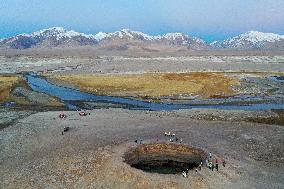
An aerial drone photo taken on Oct. 19, 2024 shows people viewing a volcano crater in Muji Township of Akto County, Kirgiz Autonomous Prefecture of Kizilsu in northwest China's Xinjiang Uygur Autonomous Region. A multidisciplinary scientific expedition was launched on Saturday in Atux City in Xinjiang. The expedition, which will last until October 27, is expected to carry out investigations at ancient roads, historical sites and important geographical marks in Xinjiang's Kirgiz Autonomous Prefecture of Kizilsu. Phot by Ding Lei/Xinhua/ABACAPRESS.COM

  • Main
  • Top
  • Editorial
  • Creative
  • About Us
  • About ILG
  • Terms of use
  • Company
  • BEHIND
  • Price List
  • Single Plan
  • Monthly Plan
  • Services
  • Shooting
  • Rights Clearance
  • Support
  • FAQ
  • How To Buy
  • Contact Us
  • Become a Partner

© KYODO NEWS IMAGES INC

All Rights Reserved.

  • Editorial
  • Olympics
  • News
  • Sports
  • Japan
  • Tech
  • Royal
  • Disaster
  • NorthKorea
  • Old Japan
  • SNS
  • Creative
  • Food
  • Japan
  • Landscape
  • Animal
  • Popular
  • #Ukraine
  • #Russia
  • #coronavirus
  • #N. Korea
  • #Thailand
  • #China
  • #Ukraine
  • #Russia
  • #coronavirus
  • #N. Korea
  • #Thailand
  • #China
  • Food
  • Japan
  • Landscape
  • Animal
  • Olympics
  • News
  • Sports
  • Japan
  • Tech
  • Royal
  • Disaster
  • NorthKorea
  • Old Japan
  • SNS